
What is cross-dressing?
A cross-dresser is someone who, temporarily or occasionally, presents themselves in a gender expression traditionally associated with the opposite sex. In practice, cross-dressing often refers to a man who, at certain times, dresses, applies makeup, and presents himself as a woman.
Cross-dressing, however, can mean much more than just wearing certain clothes. For many cross-dressers, their feminine appearance is an important part of their personality. When they are cross-dressing, they may use a feminine name, behave in a feminine manner, feel feminine at that moment, and prefer to be addressed as a woman.
The experience varies greatly from person to person. For some, cross-dressing is primarily about clothing and appearance. For others, it’s about expressing and experiencing a feminine side or subidentity. The frequency also varies: from a few times a year to very regularly.
It is typically characteristic of transvestism that someone non-permanent if wanting to live as the other gender or permanently identifying as such. For example, a male cross-dresser may identify and live as a man in everyday life, while fully experiencing his feminine side at other times.
Cross-dressing in itself says nothing about sexual orientation. A cross-dresser can be heterosexual, homosexual, bisexual or of another orientation.
The terms transvestite and crossdresser are often used interchangeably. Some people prefer crossdresser, others consciously call themselves transvestite, and still others part-time woman or bigender. At Travestie Vlaanderen, we respect how someone describes themselves within this experience.
Many cross-dressers therefore prefer not to speak of “dressing up”, but of "changing clothes". That word feels more respectful to many, as it is not about playing someone else, but about making oneself visible in a different way.
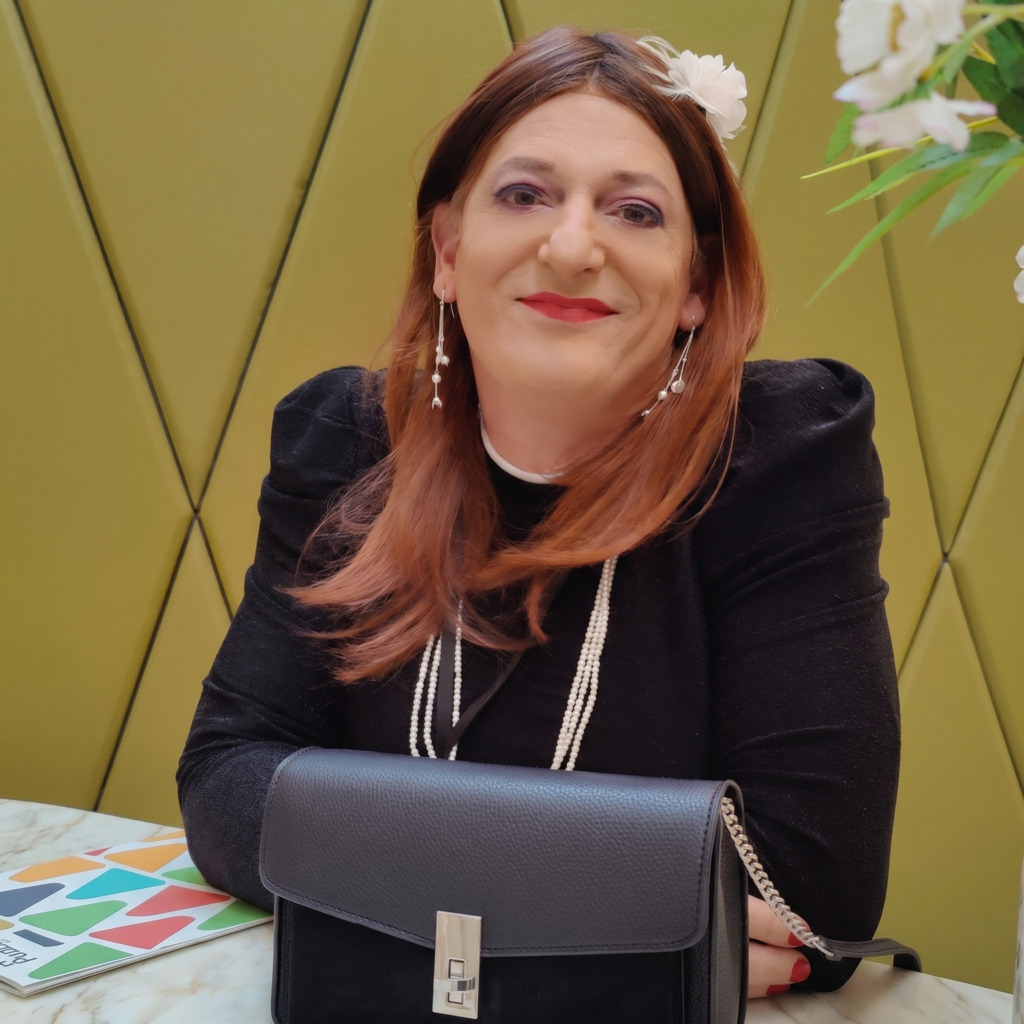
Key Characteristics of Cross-Dressing
- Cross-dressing is a form of self-expression.
- It says nothing about someone's sexual preference in itself.
- It does not automatically mean someone is transgender.
- Many people experience cross-dressing in private, in silence, or in a familiar environment.
- Everyone experiences cross-dressing in their own way.
Cross-dressing can be playful, creative or stylish for one person, and deeply personal, emotional or identity-related for another. Therefore, there is no single right way to experience cross-dressing.
Everyone also chooses for themselves which term best matches their own feelings. Within the community of cross-dressing, various words are used, such as cross-dresser, bi-gender, or part-time woman. For some, one of these words feels very right, while others prefer to use a different term. The most important thing is that someone is allowed to name themselves in a way that feels safe and recognisable.
What is the difference between cross-dressing and being transgender?
Transgender is primarily about gender identity: how someone identifies internally.
A trans woman is someone who was registered as male at birth, but identifies as a woman. A trans man is someone who was registered as female at birth, but identifies as a man. In addition, non-binary gender identities exist, among others.
Being transgender does not require a physical transition. A trans person therefore does not need to use hormones or undergo surgery. A legal change of gender registration is also not necessary to identify as transgender.
There is an important difference here compared to cross-dressing. For a cross-dresser, the experience of being female or male may be tied to specific moments or situations. For example, a male cross-dresser may go about his daily life as a man and identify as a man, while experiencing a feminine side or sub-identity when presenting as a woman.
In contrast, a trans woman identifies as a woman, even when she is not wearing female clothing, make-up, or other female physical characteristics at that time. Her gender identity is therefore not dependent on the moment she presents herself femininely.
Cross-dressing is therefore primarily about gender expression and the temporary or occasional experiencing of a different side of oneself; being transgender is primarily about a person's gender identity.
The line isn't equally clear for everyone. Some people who live as cross-dressers for years later discover that their feminine or masculine identity goes deeper for them and eventually come to identify as transgender. Others happily remain cross-dressers their entire lives and feel no need to live as the other gender permanently.
Cross-dressing and being transgender are therefore not the same thing, but people’s experiences of gender cannot always be neatly categorized into two completely separate groups.
Why is cross-dressing still a taboo?
For many people, cross-dressing is still taboo because it doesn't neatly fit into the rigid boxes society often uses to think about gender. We're used to categorising people as male or female, masculine or feminine, and often expect that outward expression to remain constant.
In the case of cross-dressing, a person may appear in public in the gender assigned at birth, but at other times feel the need to dress, present themselves or experience life in a different gender expression. This can be confusing to outsiders, as it appears as though the person is moving between two worlds.
For the individual themselves, however, this need not be a contradiction. Cross-dressing can simply be a way of giving space to different sides of themselves. It is not necessarily a matter of pretending, but rather a form of self-expression that goes deeper than clothing alone.
Because cross-dressing does not always fit into simple categories, some people find it difficult to understand. And, unfortunately, people often treat things they do not understand as taboo. Greater openness, explanation and interaction can help to break down that taboo.
What is the difference between a transvestite, travesty, and cross-dressing?
The words transvestite, transvestism, and cross-dressing are often used interchangeably, but each has its own nuance.
The Dutch word travestie refers to the experience or practice where someone expresses themselves through clothing, style, or appearance that is traditionally associated with another gender.
A in Dutch travestiet or cross-dresser is someone who experiences transvestism or cross-dressing.
The word ‘transvestite’ is an older term. It used to be more commonly used, including in medical or psychological contexts. For some people, the word still feels familiar, whilst others find it somewhat outdated or distant.
Cross-dressing is a more modern term that primarily refers to the act itself: wearing clothing or adopting an appearance traditionally associated with a different gender. Many people find the term more neutral and less loaded.
The word 'travesty' is still known, but in the media it has sometimes acquired a sensational or caricatured connotation. As a result, some people immediately think of show, humour or exaggeration, whereas for many cross-dressing is precisely an intimate and personal experience.
Therefore, it's important to remember: a label is not a hierarchy. There are no “more” or “less” valuable forms of cross-dressing, or gender expression. It's not about the perfect label, but about being allowed to be yourself, in your own way and in your own words.
Various forms of cross-dressing
Cross-dressing has various forms and experiences. Although the interpretation is personal for everyone, we can distinguish a number of broad outlines. This classification helps to better understand how diverse cross-dressing can be.
Gender-oriented cross-dressing
This is the form on which Travestie.Vlaanderen primarily focuses.
This concerns people, often men but not exclusively, who at times dress, present, or experience themselves in a different gender expression, usually feminine. For them, this is not a role or performance, but a personal experience that can be connected with feelings, identity, beauty, peace, and self-confidence.
Some people also use cross-dressing as a way to explore their gender identity. That doesn't necessarily mean that someone is transgender or wants to undergo a social or medical transition. It can also simply be a valuable part of who they are.
Drag or Show performer
Drag is an art form of expression where gender is often portrayed theatrically, exaggerated, or playfully. Drag queens and drag kings usually perform for an audience, often incorporating humour, music, costume, makeup, and stage presence.
Although drag and cross-dressing can sometimes appear similar, the intention is often different. Drag is usually art, performance, and entertainment. For many people, crossdressing is more of a personal and internal experience.
In theatre, film and opera, too, there are forms of cross-dressing, often as part of a role or story. This is separate from a person's personal gender identity or private experience.
The term drag originates from historical theatre, where it referred to long garments that would “drag” across the floor. Over time, this evolved into a concept for playing with gender expression in an artistic and performative context. The often-heard explanation that drag stands for “Dressed Resembling A Girl” is a later interpretation, not an original meaning.
Fetishistic cross-dressing
For some people, wearing certain clothes or adopting a particular look may be linked to sexual arousal. In such cases, the focus is not so much on identity or self-expression, but rather on a sexual or fetishistic experience.
That is a different motivation from gender-based cross-dressing. It is important to make that distinction, because for many people, cross-dressing is not intended to be sexual, but is about feelings, peace of mind, identity and self-expression.